



Hybrid DAF Clarifier Conversion transforms aging clarifiers into high-performance assets while improving resilience to algae, turbidity, and changing source water conditions.
When Aging Clarifiers Become the Bottleneck
Many water treatment plants across North America face a common challenge: infrastructure built decades ago must now handle increasingly difficult source water conditions.
For the Union Water Supply System (UWSS) in Ontario, this challenge was particularly evident at the Ruthven Water Treatment Plant, which provides drinking water to about 67,000 residents in Kingsville, Essex, Lakeshore, and Leamington while also supporting the region’s expanding greenhouse industry.
Drawing raw water directly from Lake Erie, the facility regularly experiences seasonal algae blooms, rapidly changing turbidity and fine suspended particles that challenge conventional clarification.
While the existing upflow clarifiers had served the utility well for many years, they had become the primary constraint on plant performance. Rather than expanding the treatment plant or constructing entirely new clarification facilities, UWSS sought a solution that could unlock additional treatment capacity while making better use of the infrastructure already in place.
The Challenge
Lake Erie presents some of the most variable raw water conditions encountered by drinking water utilities. Although normal turbidity typically ranges between 4 and 15 NTU, storm events can increase turbidity dramatically, occasionally exceeding 400 NTU.
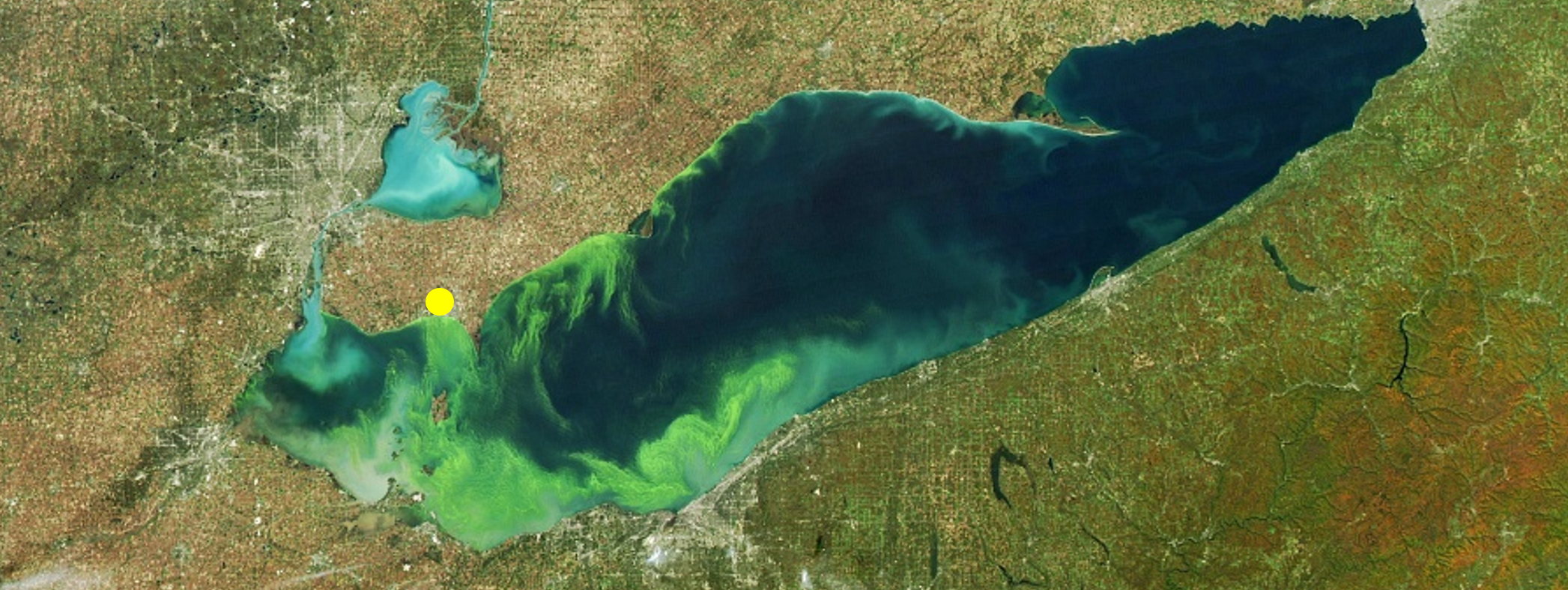
These events are often accompanied by algae blooms, floating solids, colloidal material and fine particles that are difficult to remove using conventional settling alone.
The Ruthven WTP is rated at 125 MLD (33 MGD) and utilized four conventional upflow clarifiers. As operating conditions became more demanding, the existing clarifiers faced several limitations:
- Limited treatment capacity during peak demand
- Difficulty handling rapidly changing raw water quality
- Reduced performance during high turbidity events
- Floating solids and algae accumulation
- Reduced operational flexibility
The result was a clarification process that increasingly limited overall plant performance.
The utility needed more capacity, better process resilience, and improved algae management—without expanding the plant footprint.
Evaluating the Options
Several treatment alternatives were considered, including:
- High-rate clarification technologies
- Plate settler systems
- Dissolved Air Flotation (DAF)
While conventional DAF performs exceptionally well for algae removal and low-density suspended solids, severe turbidity events can introduce large quantities of heavier particles that are better removed through sedimentation.
The challenge was finding a solution that effectively removes both:
- Heavy suspended solids associated with turbidity spikes, and
- Algae, colloids, and fine particles that are difficult to settle
The Solution
Napier-Reid developed a Hybrid DAF conversion that combines the strengths of conventional sedimentation and dissolved air flotation within the existing clarifier structure.

Instead of abandoning the original concrete basin, the existing clarifier was converted into a Hybrid DAF unit capable of removing a broader range of contaminants under changing raw water conditions.
The Hybrid DAF process works by:
Using sedimentation to remove:
- Heavy suspended solids
- High-density particulate matter
- Turbidity-associated loading during storm events
Using flotation to remove:
- Algae
- Light organic material
- Colloids and fine particles
- Naturally floating solids
By integrating both treatment mechanisms into a single process, the converted clarifier provides greater resilience across a much wider operating range than conventional clarification alone. Equally important, the conversion reused the existing clarifier infrastructure, minimizing new construction while preserving the plant footprint.
Delivering More Capacity Without Expanding the Plant
One of the greatest advantages of the project was the ability to reuse the existing clarifier basins. By converting an existing clarifier, UWSS was able to:
- Increase treatment capacity
- Improve clarification performance
- Extend the useful life of existing infrastructure
- Reduce capital construction requirements
- Minimize project implementation time
- Avoid constructing a new clarification basin
Although verification of aging infrastructure and integration within the existing facility presented engineering challenges, the conversion was completed successfully while maintaining use of the existing concrete structures through careful design and construction.
The Results
The Hybrid DAF conversion delivered measurable improvements in treatment capacity, water quality and operational flexibility.
- Treatment Capacity increased 2.8x
Following conversion of one clarifier to the hybrid DAF system, it demonstrated stable operation at approximately 50 MLD (13.2 MGD) compared with approximately 17 MLD (4.5 MGD) for the original conventional clarifier, representing a 2.8x increase in individual clarifier capacity.
By removing the clarification bottleneck, UWSS significantly increased plant throughput without expanding the treatment plant footprint.
- Improved Effluent Quality
Beyond increasing capacity, the Hybrid DAF system consistently produced higher quality clarified water by providing:
- Lower turbidity (< 1 NTU when raw water was < 30NTU, <3 NTU when raw water was between 30 and 250 NTU, and <5 NTU during severe events ranging from 250 to 450 NTU)
- More stable process performance
- Improved algae removal
- Better resilience during high turbidity conditions
The combined sedimentation and flotation process enabled the plant to respond more effectively to rapidly changing source water conditions throughout the year.
- Greater Operational Flexibility
Operators gained a treatment process capable of adapting to a much wide range of raw water conditions without the limitations associated with traditional sludge blanket clarifiers. Rather than optimizing for only one type of solids removal, the Hybrid DAF process effectively addressed both heavy settling solids and lighter suspended materials, providing greater operational stability during seasonal and storm-driven water quality changes.
- Proven Success Led to Additional Conversions
The success of the one clarifier conversion led UWSS to proceed with a second clarifier conversion, achieving similar positive results.
The project demonstrates how utilities can extend their existing clarification infrastructure into substantially higher-capacity assets while significantly improving plant performance.
Could Your Clarifier Be Limiting Plant Performance?
Many water treatment facilities face the same challenges experienced at Ruthven:
- Clarifiers more than 20 years old
- Solids carryover issues
- Floating solids or algae accumulation
- Seasonal raw water quality variability
- Capacity limitations
- Pending rehabilitation or replacement decisions
If your plant is facing any of these conditions, a Hybrid DAF conversion may offer a practical alternative to full clarifier replacement.
By combining the strengths of sedimentation and flotation, utilities can often increase capacity, improve performance, and maximize existing infrastructure investments.
Talk to Napier-Reid About a Clarifier Health Check
If your facility is experiencing clarification bottlenecks or evaluating rehabilitation alternatives, Napier-Reid can help assess whether a Hybrid DAF conversion is the right solution.
Our team can evaluate your existing clarification process, identify capacity constraints and develop a modernization strategy tailored to your facility’s operational goals.
Contact Lynn Douglass to schedule a Clarifier Health Check.